
The truth about complex trauma
And why so many survivors feel like they're failing

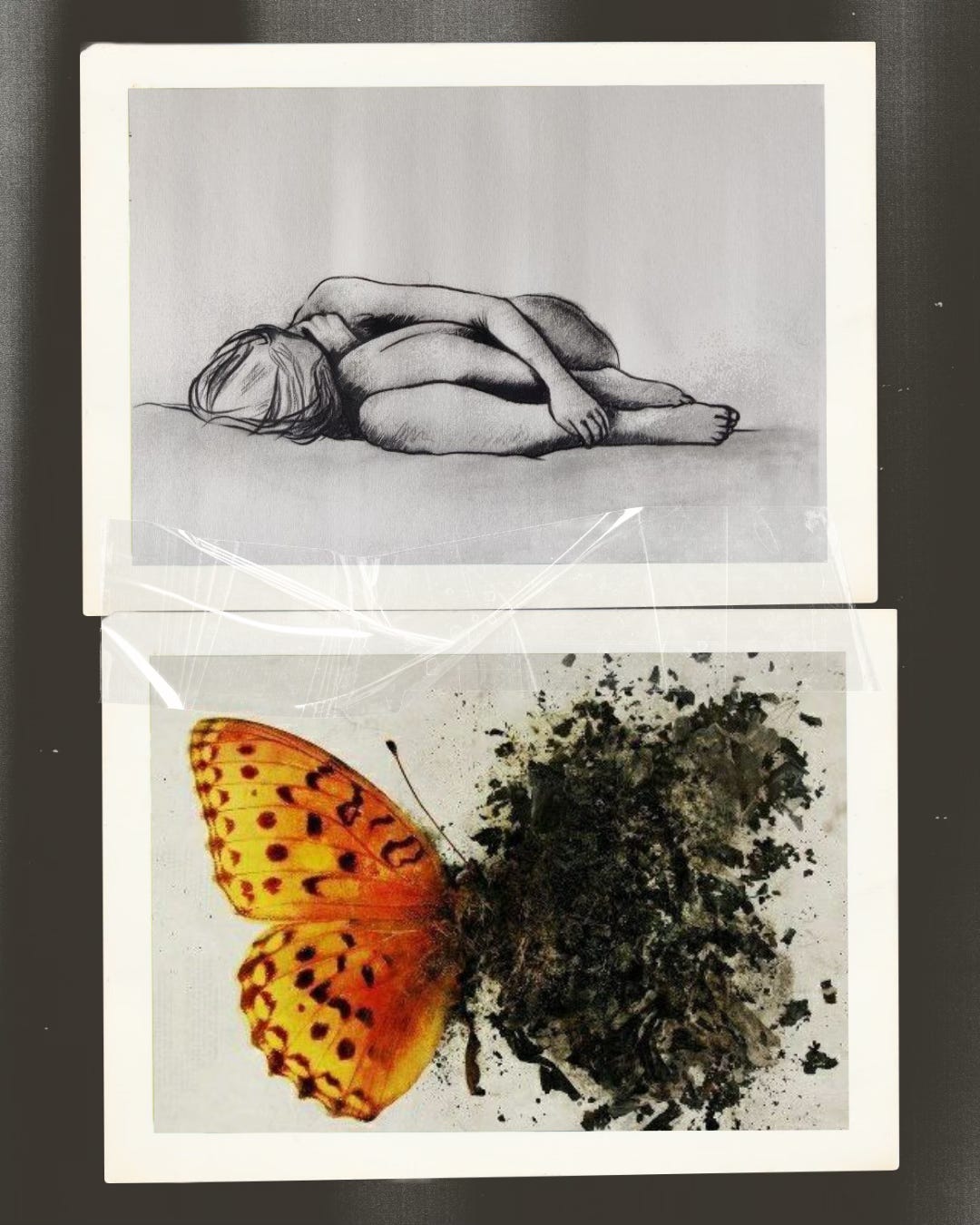
Most people think they know what trauma looks like. Pop psychology often conceives it as a singular incident that knocked a person’s world off its axis. A shocking event with a distinct “before” and “after.” Think car accidents, school shootings, and natural disasters. As a trauma therapist and fellow human, I can attest that those types traumatic experiences are real and deserve attention. They also represent a sliver of the broader landscape within the vast trauma field.
The trauma that fills my clinical practice often looks different. It is chronic and relational. It starts early, often before words exist to describe experiences. It’s subtle but it cuts to the bone, and it ends up living in the nervous system like a second spine. And because we rarely talk about this form of trauma with any real depth, the people who live it often feel like they are failing in therapy.
The model is failing, not them.
This is where the research on complex PTSD becomes impossible to ignore. I recently read a paper by Deborah Korn on EMDR and the treatment of CPTSD where she makes the point that when trauma is prolonged and interpersonal, it impacts every domain of psychological development. It touches everything. The inner emotional world, identity dynamics, attachment relationships, and somatic awareness are all tapped. Not one corner of the entire human experience is spared.
That is why so many survivors say things like:
“Why am I still struggling with relationships?”
“I hate myself and I don’t deserve love”
“Why do I feel like the trauma isn’t over even though it happened ten years ago?”
“I don’t know who am. I never did.”
These words capture the devastating legacy of complex trauma.
It’s subtle but it cuts to the bone, and it ends up living in the nervous system like a second spine.
I like to conceptualize PTSD as being organized around a traumatic event, whereas Complex PTSD is organized around a traumatic environment. A single event can be named, but an environment becomes the air you breathe. When trauma is chronic and relational, the brain adapts for survival in such a way that hypervigilance becomes personality, shame becomes self-identity, and dissociation becomes reflexive.
And yet so many trauma treatments still operate as though talking about the memory is enough. As if telling the story from beginning to end is the cure. For survivors of chronic trauma this approach is really dangerous. Exposure to traumatic memory material without stabilization and a therapeutic container can trigger dissociation, emotional flooding, and therapy dropout. People who drop out of treatment might internalize this as a personal failure. They assume they are “too damaged” or “too complicated” and that they cannot be helped.
The truth is far simpler. The clinical approach is faulty.
I like to conceptualize PTSD as being organized around a traumatic event, whereas Complex PTSD is organized around a traumatic environment.
In trauma therapy, a phase-oriented approach should always be prioritized.
The first phase focuses on stabilization. Not superficial coping skills, but the deeper work of teaching the nervous system how to manage hyperaroused and hypoaroused states, and how to expand to the window of tolerance. Stabilization involves titrated safety, microdoses of agency, and the slow rebuilding of affect tolerance. This phase is essential for people with histories of dissociation, self-harm, chronic dysregulation, and relational trauma.
Phase Two is memory processing. Not all at once. Not even chronologically. Definitely not by force. Memory processing is relational, paced, and attuned. It works in small, digestible segments. It follows the nervous system rather than a strict agenda. It respects the parts of the self that learned to survive.
Phase Three is where survivors learn to live without organizing their lives around threat. Identity blooms. Intimacy becomes possible. A foreseeable future exists. The work becomes about vitality instead of survival. The most profound thing about this third phase is how much space it creates within a person.
Memory processing is relational, paced, and attuned. It works in small, digestible segments.
The research is blunt about this. Survivors of early, chronic trauma need more time in treatment because the injuries are developmental, relational, and cumulative. They cannot be resolved in six sessions of anything. Not EMDR. Not CBT. Not prolonged exposure.
The clinical truth is that survivors of complex PTSD do recover, and many recover deeply. But the care must be structured, paced, and rooted in a therapeutic relationship that acts as a corrective emotional environment. Anything else risks retraumatization.
Healing from complex trauma is an iterative, layered process. It is both grief and reclamation. You are not behind or broken, and you are not difficult. What feels like dysfunction is often adaptation in its most sophisticated form. And those adaptations can shift and rewire. I watch it happen every week.
If this resonated with you, I write regularly about trauma, Somatic Experiencing, EMDR, and the politics of healing. If you want more pieces like this, along with clinical insight, research breakdowns, and psychoeducation, you can subscribe below.
As someone living with complex PTSD, this feels like someone is finally describing the world I actually live in. For so long I thought I was failing therapy because the tools everyone kept offering never seemed to work for me. I tried EMDR and it overwhelmed me every time. My system just could not tolerate going anywhere near the memories without shutting down or coming apart. I kept thinking the problem was me.
What you write about stabilization makes so much sense. I was often told to “learn coping skills” but how can you learn skills when the basic internal structure for them was never allowed to develop in the first place. Chronic relational trauma shapes the entire nervous system long before words or choices exist. You cannot simply layer skills on top of a body that is still organised around danger.
Your point about complex PTSD being shaped by an environment rather than an event matches everything I have lived. Hypervigilance feels like personality. Shame feels like identity. Dissociation happens before I even know it is coming. Treatments that expect me to dive straight into memory work only leave me feeling overwhelmed, defeated or ashamed for not being able to “just do it”.
What has helped is exactly what you describe. Slow work. Attuned work. A calm therapeutic relationship that actually allows my nervous system to settle. In that kind of space I can feel my capacity widening, tiny bit by tiny bit. It is not dramatic, but it is real. And it is the first time healing has felt possible.
Reading this is an enormous relief. It makes me feel less broken. Less “too difficult”. Less like a therapeutic outlier. Thank you for naming the truth that survivors of complex trauma are not failing. We were simply never given the foundations that healing requires. And with the right relationship, those foundations can finally begin to form. It is this process I have described in my own writing, particularly in the Little Girl and the Gardener stories
Well said, I could not agree more and I love your distinction between a traumatic event and a traumatic environment.